
Request and assess
The merchant provides the waste-oil type, estimated volume, location, preferred schedule and current container photos. The request is reviewed before confirmation.
From collection request to responsible recovery
SmartCycle 8 connects pickup coordination, field records and recovery planning so Philippine food-service establishments can understand what happens after used oil leaves their site.
Book a pickupCollection and logistics workflow
Collection is only the first visible step. Useful environmental records depend on documenting the source, pickup, transport, receiving checks and intended recovery pathway.
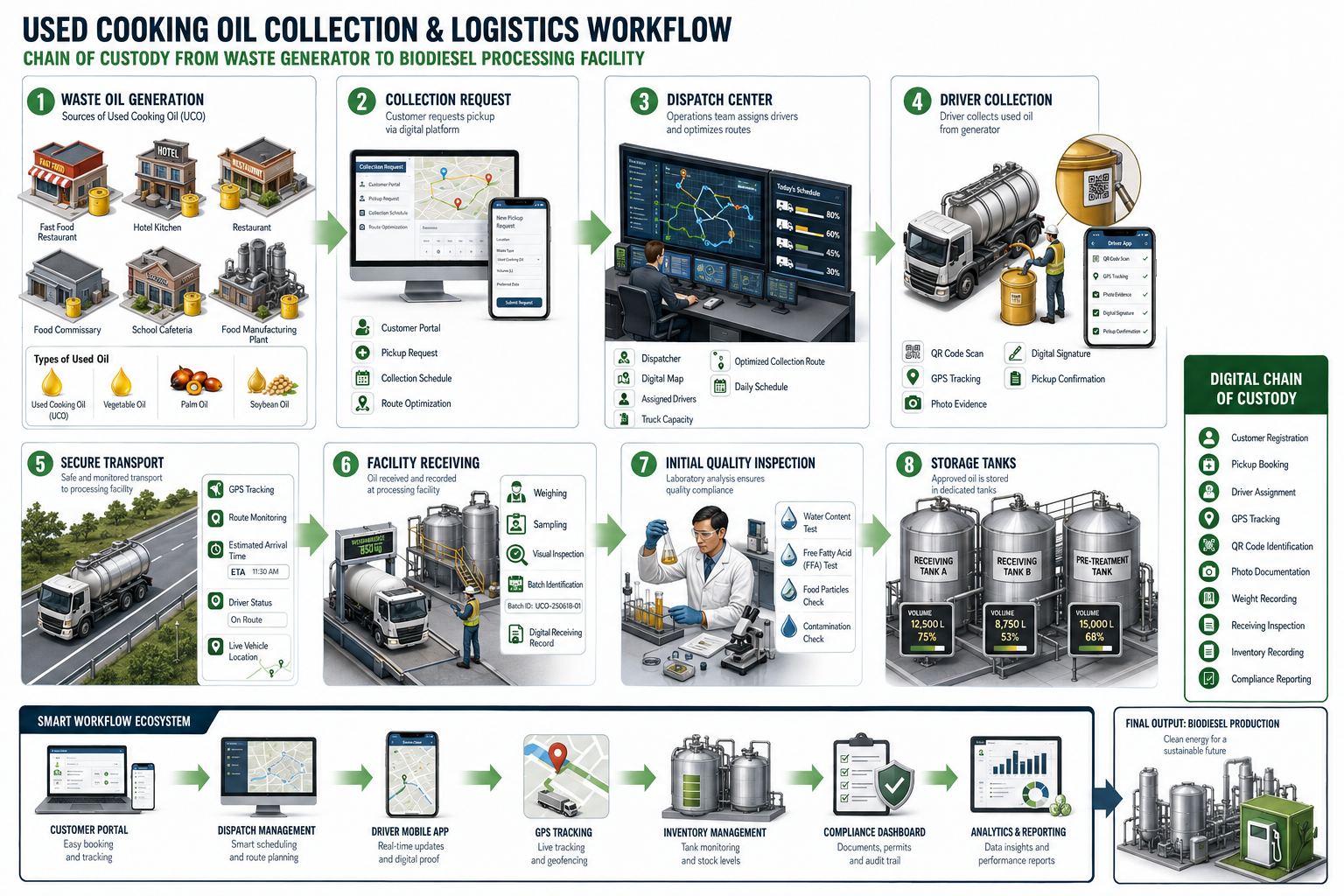
The operating journey
A responsible service connects operational movement with the information businesses need for accountability.
The merchant provides the waste-oil type, estimated volume, location, preferred schedule and current container photos. The request is reviewed before confirmation.
Eligible material is assigned a collection window. The field team confirms the source, records the pickup and handles the oil under controlled operating procedures.
Dispatch and collection records connect the merchant site with the receiving destination. Dates, quantities and operational references create a clearer internal trail.
At the appropriate facility, eligible oil may be inspected, filtered and prepared as a recoverable feedstock. Any biodiesel conversion is subject to the confirmed downstream process and applicable permits.
Why traceability matters
Collection data can strengthen internal waste records, support audit preparation and help establishments demonstrate a more organized environmental-management process. SmartCycle 8 is building this workflow around practical Philippine operating realities, including DENR, EMB and applicable LGU requirements.
Industries we service
Restaurants, franchise groups, hotels, groceries, schools, commissaries and event venues generate used oil at different volumes and times. Site access, storage, peak hours and internal approvals shape the collection plan.